2026-10-17 ·
Mold Growth After Snow Melt In Blue Jay Mountain Homes
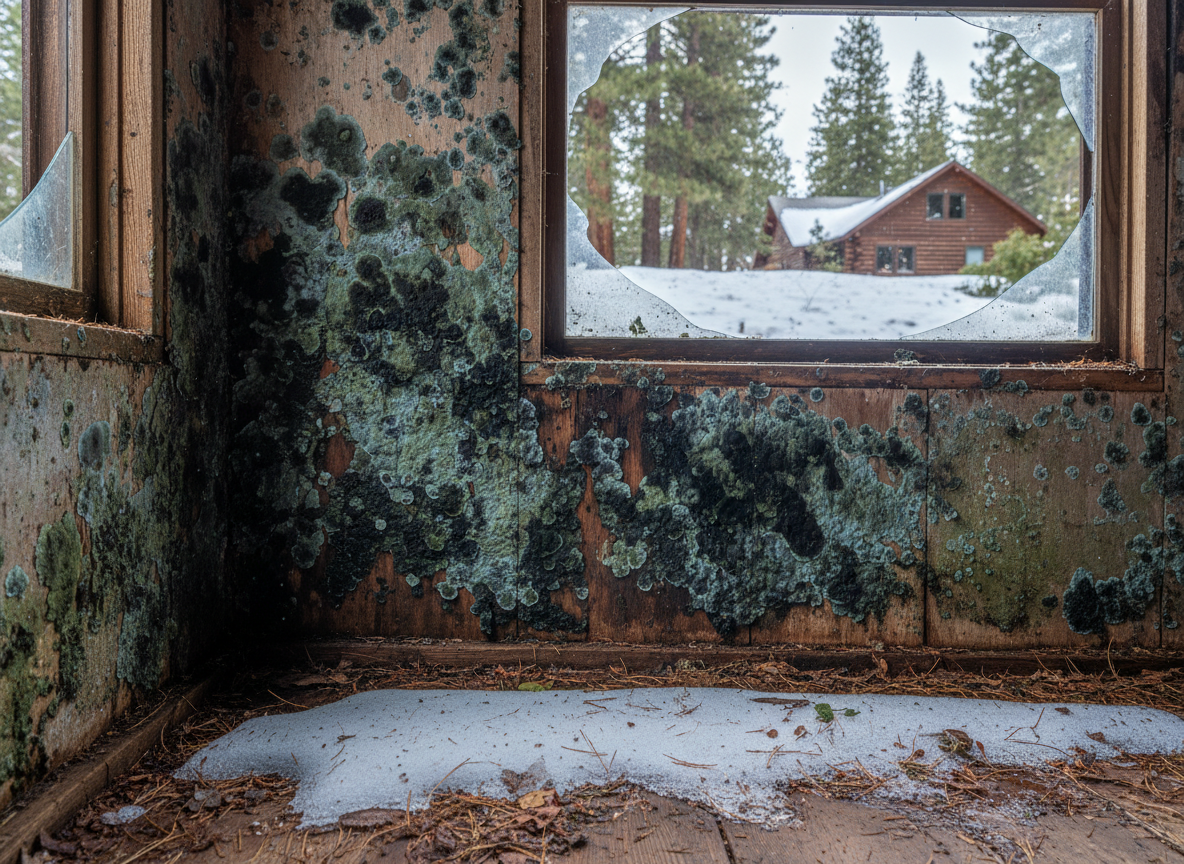
Snow melt in Blue Jay typically creates conditions for mold growth within 3-6 weeks after the last heavy snow, especially in homes with crawl spaces or older foundations exposed to runoff from the San Bernardino Mountains.
How Snow Melt Creates Moisture Pathways
Blue Jay sits at higher elevation where winter snow accumulates on roofs and around foundations. As temperatures rise in early spring, melting water flows toward homes built on sloped terrain common throughout the area. This water often enters through small gaps in siding, around window wells, or into crawl spaces that lack proper grading. Mountain homes near Lake Arrowhead experience the same issue when snowpack from surrounding ridges drains toward lower lots. Without quick drying, relative humidity inside wall cavities can stay above 60 percent long enough for spores to colonize insulation and wood framing. Local conditions like pine needle buildup around foundations slow evaporation and keep soil damp for weeks after visible snow disappears.
Affected Areas in Typical Blue Jay Homes
Crawl spaces and basements see the highest risk because cold air settles there and meltwater pools against stem walls. Attics also suffer when roof valleys or ice dams from winter storms allow water to seep under shingles. Older cabins in Blue Jay and Running Springs often have dirt crawl spaces without vapor barriers, so moisture from snow melt wicks directly into floor joists. Garages attached to homes on hillsides can channel runoff under the slab if the driveway lacks proper drainage. These spots stay cooler than living areas, extending the time wood stays wet enough for mold to establish.
Visible and Hidden Signs After Melt Season
Homeowners notice musty odors first when entering closed-up spaces in April or May. Dark staining along baseboards or on subfloor edges appears next in rooms above crawl spaces. White cottony growth on joists signals active colonies even when no black spots show on drywall. Air quality changes become noticeable when HVAC systems pull spores from damp attics into living spaces. Checking these areas early prevents larger colonies that require more extensive work later in the season.
Steps to Reduce Risk in Mountain Homes
Clear snow away from foundations before it melts and improve grading so water flows away from the house. Install or repair gutters that direct roof runoff at least 5 feet from the foundation. Add vapor barriers and insulation in crawl spaces to limit ground moisture. Ventilate attics properly during shoulder seasons when daytime warmth meets cold nights. These actions address the specific freeze-thaw cycles that define the San Bernardino County mountain climate.
For properties already showing signs, mold inspection identifies hidden growth before it spreads further. Homeowners in Lake Arrowhead often combine this with seasonal checks after heavy snow years.
When Professional Assessment Makes Sense
If moisture has sat for more than two weeks or odors persist after drying attempts, testing confirms whether mold has taken hold. What affects mold remediation costs in the San Bernardino Mountains explains how access to crawl spaces and attic height influence the scope of work in local homes. Early involvement of a mold remediation near me team prevents damage to insulation and framing that would otherwise require replacement. Residents in Blue Jay and nearby communities like Crestline benefit from addressing issues before summer humidity arrives and reactivates dormant spores.