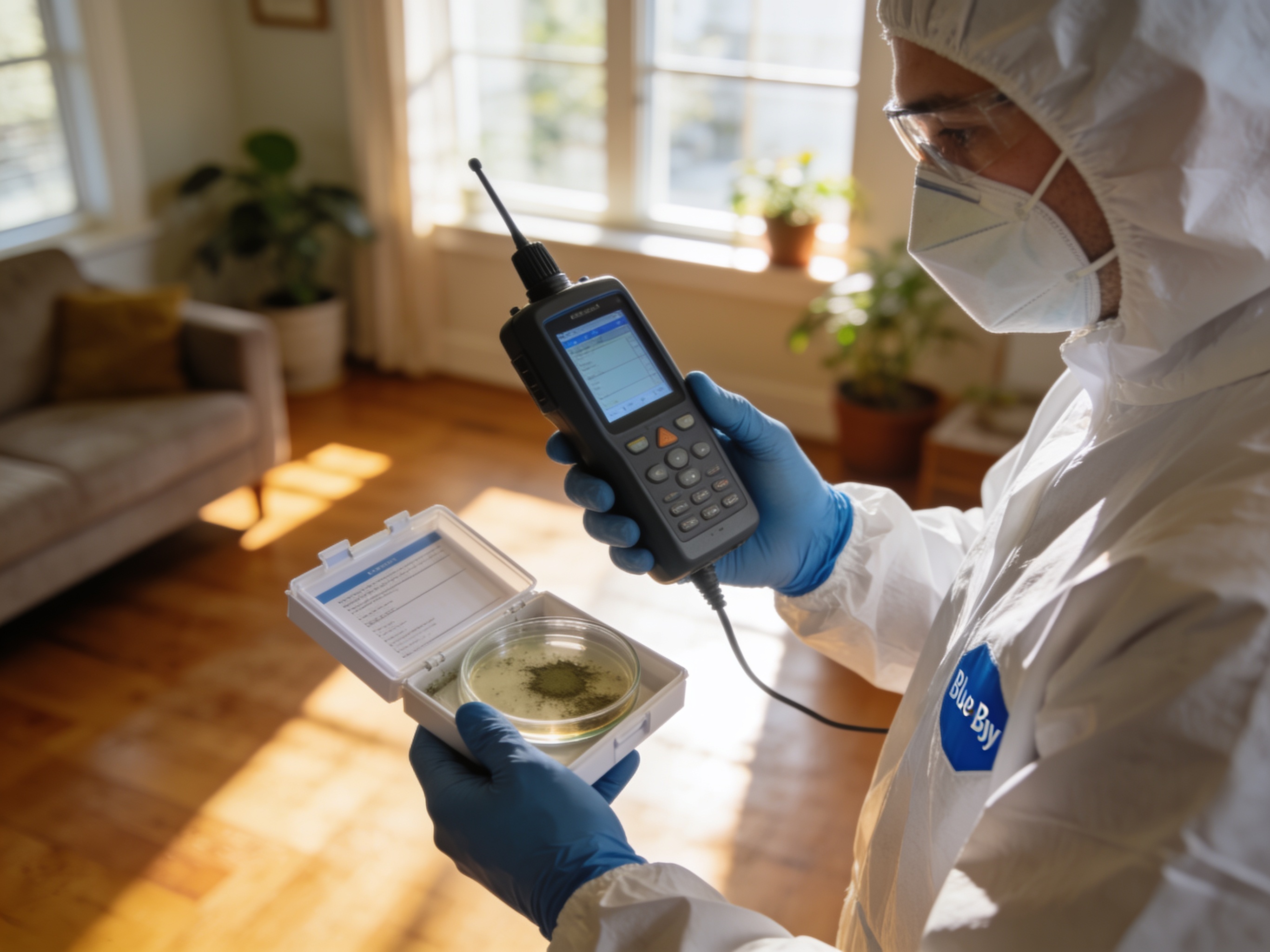
Blue Jay sits at elevation in San Bernardino County where heavy winter snow loads on roofs and spring meltwater often enter attics and crawl spaces of older cabins and homes built before modern vapor barriers became standard. Air sampling and surface testing must account for these seasonal moisture spikes because warm summer days can mask the source until humidity climbs again. Technicians check HVAC returns, wall cavities behind wood siding, and underfloor areas where lake-effect moisture from nearby Lake Arrowhead seeps in during thaws.
Testing protocols here differ from valley work because the same home can show elevated spore counts in winter from ice-dam leaks yet read clean in July. We pull samples from multiple zones including bedrooms, laundry rooms, and attached garages, then compare indoor versus outdoor baselines collected the same day. Edge cases include false negatives in tightly sealed post-1990s builds where mold hides behind spray-foam insulation until a pipe bursts or a skylight fails.
Homeowners in Running Springs and Blue Jay often confuse musty odors from decaying pine needles in gutters with actual interior growth. Proper testing includes moisture metering of subflooring and attic sheathing plus visual inspection of foundation vents that frequently clog with forest debris. Results guide whether remediation stays limited to one room or expands to the entire structure before snow returns.
Documentation from these tests helps owners understand ventilation upgrades needed for the next winter cycle, especially in homes along Highway 189 where wind-driven snow can force water under eaves.
Technician insight
In Blue Jay the thing that catches most people out with air quality and mold testing is assuming summer readings tell the full story. Snow melt from the previous winter often leaves hidden moisture behind knee walls and under tongue-and-groove floors in homes along CA-189, yet the mold stays dormant until the next thaw. Testing only in July misses the real source.
Hidden Attic Growth After Winter Thaw
A homeowner near Lake Arrowhead noticed musty air in an upstairs bedroom each spring. Testing revealed elevated aspergillus levels in the attic where ice-dam water had entered through a ridge vent the prior winter. We isolated the affected section, removed the damp insulation, and confirmed clearance before the next snow season.
How it works
- 1
Initial Consultation
Discuss symptoms and review the property layout, noting proximity to Lake Arrowhead or elevation changes that affect drainage.
- 2
On-Site Sampling
Collect air and surface samples from multiple zones while measuring moisture in attics, crawl spaces, and walls.
- 3
Lab Analysis
Send samples for spore identification and compare against outdoor controls taken the same day.
- 4
Report Delivery
Provide written findings with location-specific recommendations tied to Blue Jay's seasonal weather patterns.
Pricing
Upfront quotes based on square footage and number of test zones; most Blue Jay properties require three to five samples.