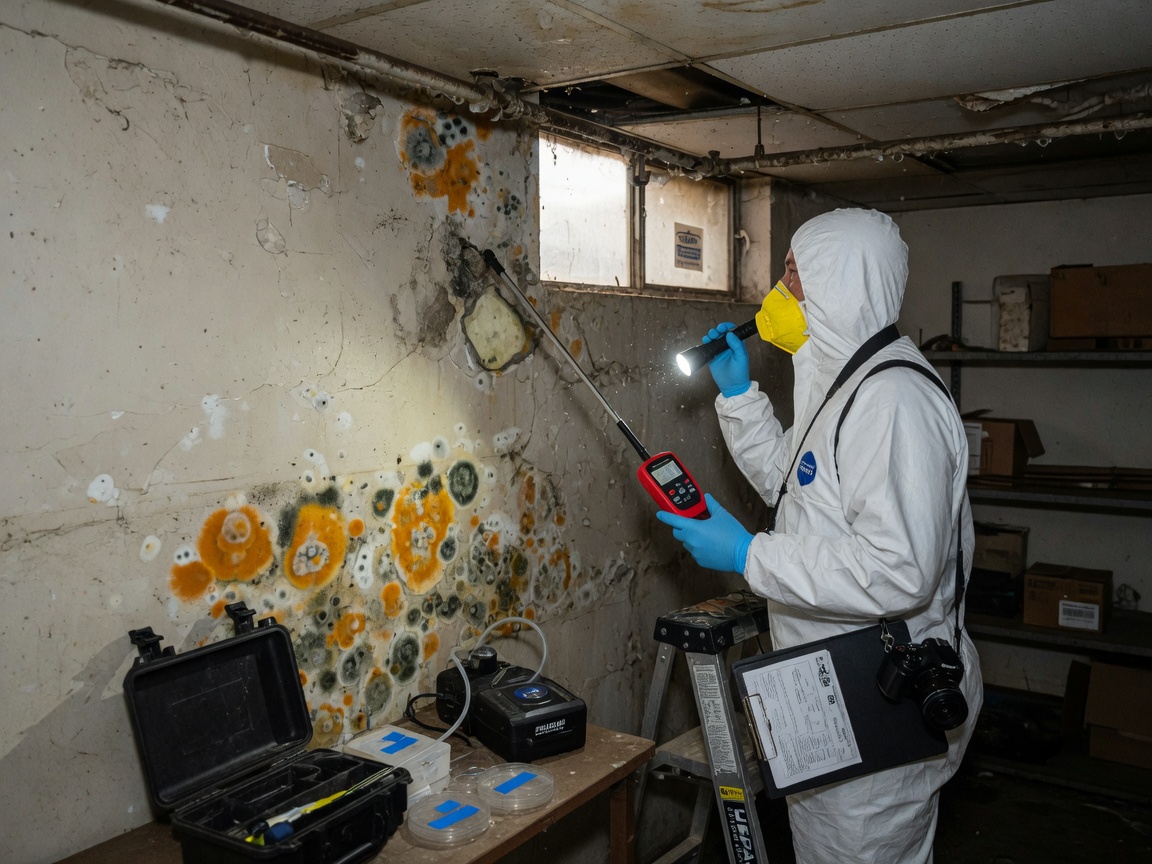
Commercial properties in Blue Jay and nearby Lake Arrowhead often sit on slopes where snow melt from San Bernardino County winters pools against foundations. Retail spaces, lodges and small offices built decades ago frequently have crawl spaces or flat roofs that trap moisture long after the snow is gone. A commercial mold inspection must check HVAC systems, wall cavities behind tenant improvements and any wood framing that has absorbed repeated freeze-thaw cycles rather than relying on surface sampling alone.
Running Springs and Blue Jay commercial buildings share similar construction: older cedar or pine structures with limited ventilation. Warm summer afternoons can drive humidity into cooled interior spaces, creating condensation on metal ducts and insulation. Inspectors walk every leased suite, lift ceiling tiles, and use moisture meters on load-bearing posts that sit directly on concrete slabs poured before modern vapor barriers were common in the mountains.
San Bernardino County health and building codes require documentation of moisture sources before any remediation plan is accepted. During inspection we map water intrusion paths from roof valleys, window flashings and exterior grade that slopes toward the structure after winter plowing. Findings are recorded with photos and meter readings so property managers receive a clear scope that addresses both visible growth and the hidden conditions created by the local terrain and climate.
Technician insight
In Blue Jay the thing that catches most people out with commercial mold inspection is snow melt running under older slab-on-grade retail buildings near Lake Arrowhead; the water travels along utility trenches and shows up weeks later inside tenant walls after the surface has already dried.
Lake Arrowhead Lodge Office Wing
A property manager called after staff noticed musty air in the back offices following heavy spring snow melt. We found elevated moisture along the north foundation wall where plowed snow had been piled against the building. Moisture mapping traced water under the slab into two interior offices; the report outlined source correction and targeted drying before any tenant work could resume.
How it works
- 1
Site Walk and History Review
We review building plans and past water events with the property manager then walk every commercial space to identify visible staining and musty odors.
- 2
Moisture Mapping
Using meters and infrared we document moisture levels in walls, ceilings and floors, paying special attention to areas affected by snow melt and roof drainage.
- 3
Air and Surface Sampling
Samples are collected from HVAC returns, tenant spaces and suspected cavities to identify mold types and concentrations present in the commercial environment.
- 4
Report and Recommendations
A written report details findings, moisture sources and prioritized next steps that comply with local San Bernardino County requirements.
Pricing
Pricing for commercial mold inspection varies with square footage, number of tenant spaces and accessibility of crawl spaces or attics.