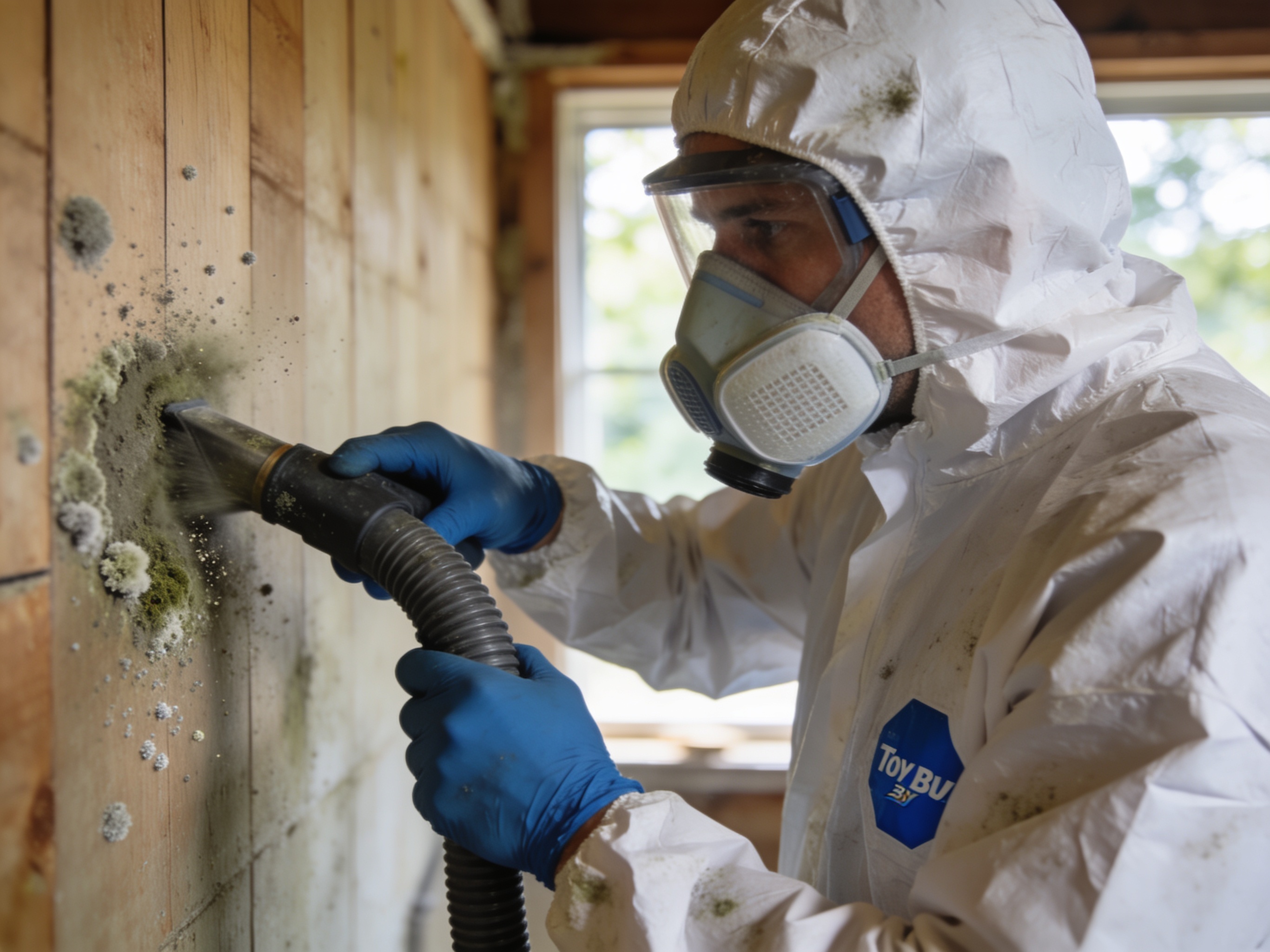
Blue Jay sits in San Bernardino County at elevation near Lake Arrowhead and Running Springs, where heavy winter snow followed by spring thaw drives water into crawl spaces and under older cabin foundations. Mold abatement here starts with locating hidden growth behind cedar siding or in attics that never fully dry after the snow load melts. Crews remove affected drywall and insulation while containing spores so they do not spread through the tight floor plans common in 1960s and 1970s builds along Highway 189.
Warm summer days can mask the problem until humidity spikes again, allowing colonies to regrow in poorly ventilated bathrooms or laundry rooms. Abatement work includes negative-air machines and HEPA filtration to keep particles out of living spaces, plus targeted antimicrobial treatment on joists that stay damp from mountain runoff. Homeowners often discover the issue only after a roof leak from heavy snow combines with poor grading on sloped lots typical around Blue Jay Village.
Proper abatement also accounts for the freeze-thaw cycle that opens small gaps in foundations each winter. Technicians cut back wet material to clean substrate, then document moisture levels before any rebuild. This prevents repeat growth when the next storm drops fresh snow on the San Bernardino Mountains.
Technician insight
In Blue Jay the thing that catches most people out with mold abatement is the way snow melt pools against the uphill side of foundations on lots along CA-189. Homeowners seal the obvious roof leak but miss the water that travels under the slab or rim joist every spring, so the mold returns the next winter.
Attic Growth After Heavy Snow Year
A Blue Jay cabin near Lake Arrowhead showed ceiling stains after record snowfall. Inspection found melt water entering through a ridge vent gap and soaking insulation over the main living area. Crews removed wet insulation, treated rafters, and installed additional ventilation; clearance testing passed before new insulation was added.
How it works
- 1
Inspection and Moisture Mapping
Technicians walk the property, check attics, crawl spaces, and wall cavities with moisture meters, then mark every area showing elevated readings from snow-melt intrusion.
- 2
Containment Setup
Plastic barriers and negative air machines isolate the work zone so spores do not travel through the compact layouts found in Blue Jay cabins.
- 3
Removal and Cleaning
Affected drywall, insulation, and wood are removed to clean substrate; HEPA vacuuming and antimicrobial application follow on remaining surfaces.
- 4
Drying and Verification
Industrial dehumidifiers and air movers dry the structure, then post-remediation testing confirms levels meet clearance before any reconstruction.
Pricing
Pricing varies by square footage affected, access difficulty in sloped lots, and whether hidden growth exists behind finished surfaces; upfront quotes provided on site.