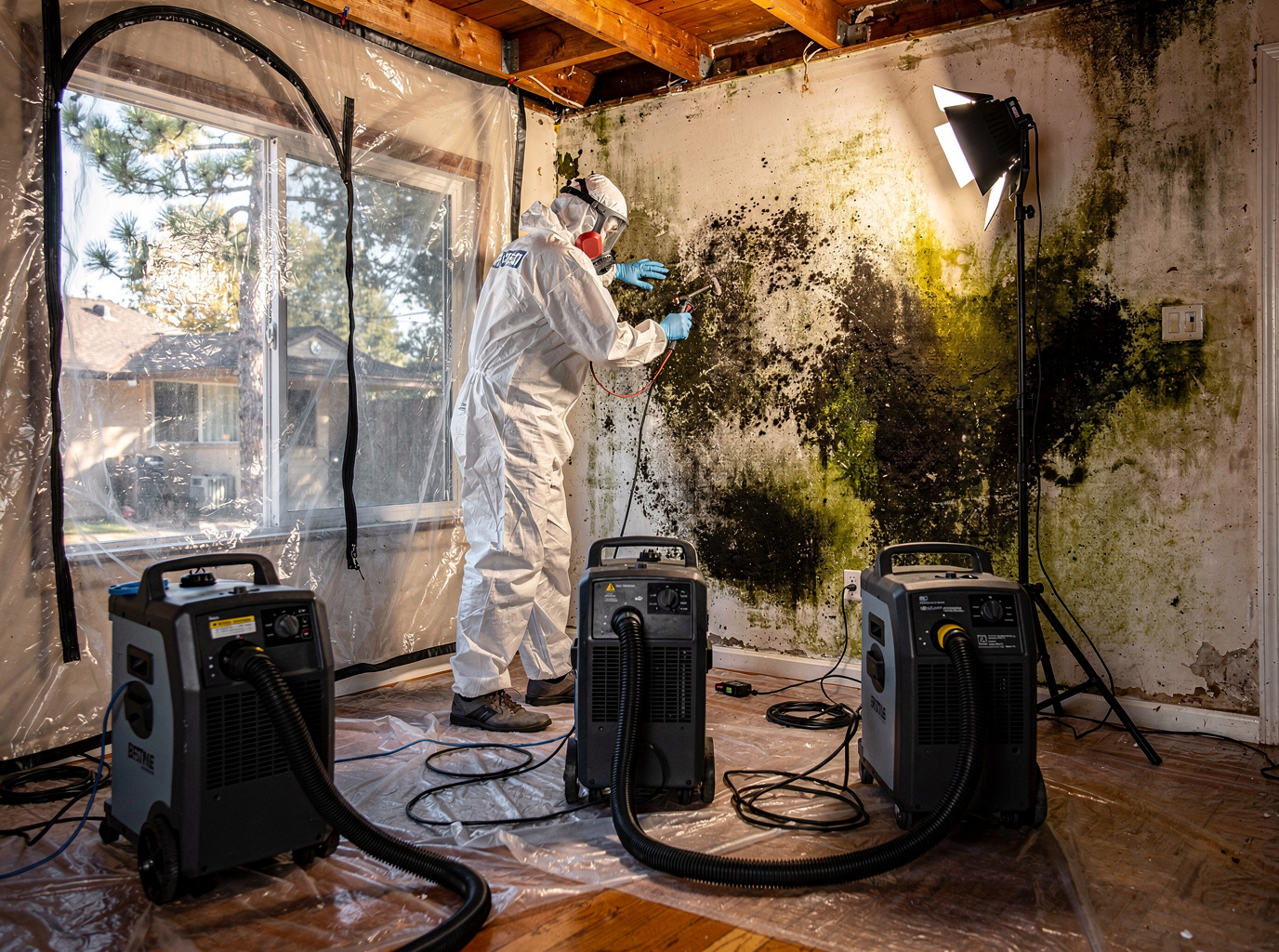
Water intrusion in Blue Jay often starts with snow melt running off the steep terrain around Lake Arrowhead and into crawl spaces of older cabins built before modern drainage standards. Once moisture reaches wood framing or insulation in San Bernardino County homes, mold colonies can establish within 48 hours during the transition from snowy winters to warm summers. Remediation crews must pull back drywall and treat joists directly rather than relying on surface sprays because hidden growth behind paneling spreads quickly in the humid microclimates near Running Springs.
Homeowners in Blue Jay frequently discover problems after roof leaks or ice dam failures that saturate attic insulation. Removing contaminated material requires negative air machines and HEPA filtration to keep spores from migrating into living areas during the dry summer months when windows stay open. Crews also check for hidden plumbing leaks under slab foundations common in mid-century homes near Highway 189, because standing water trapped against concrete can feed mold for months without obvious ceiling stains.
Proper containment and disposal follow San Bernardino County guidelines for construction waste, especially when hauling wet drywall and carpet from lakeside properties. Technicians document moisture readings at multiple depths in framing to confirm drying before any new finishes are installed, preventing callbacks when winter snow returns.
Technician insight
In Blue Jay the thing that catches most people out with water damage mold remediation is snow melt from the surrounding peaks that pools against the north side of older cabins near Lake Arrowhead. Homeowners often seal the obvious roof leak but miss the water that has wicked up into rim joists from the ground, so the mold returns the next spring when temperatures rise.
Attic Leak After Winter Storm
A homeowner in Blue Jay noticed ceiling stains after heavy snow. Inspection found ice dam water had soaked through the attic insulation and into the top plates of two bedrooms. Crews removed the wet material, treated the rafters, and ran drying equipment for four days until moisture levels normalized.
How it works
- 1
Initial Assessment
Technicians arrive from the 27264 CA-189 location and map all moisture sources using meters on walls, floors, and attics in Blue Jay homes.
- 2
Containment Setup
Plastic barriers and negative air are installed to isolate the work zone before any demolition begins.
- 3
Removal and Cleaning
Affected materials are cut out, surfaces are treated with antimicrobial solutions, and debris is removed for proper disposal.
- 4
Drying and Verification
Industrial dehumidifiers and air movers run until readings meet dry standards, followed by a final inspection.
- 5
Prevention Recommendations
Homeowners receive guidance on gutters, grading, and ventilation specific to mountain snow loads around Lake Arrowhead.
Pricing
Pricing varies by extent of hidden damage and square footage affected; most Blue Jay jobs require an on-site evaluation before a firm number is given.